
Horned Lizard Habitats
By Amanda Green, Permian Basin Master Gardener
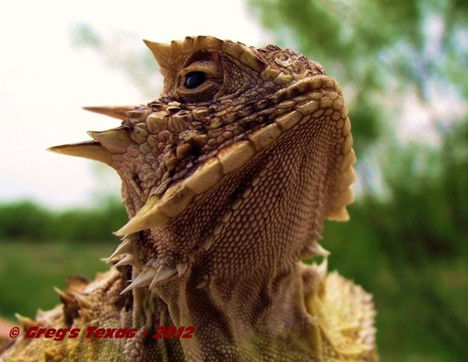
I recently had a woman contact me for help with landscaping to support her healthy population of horned lizards on her property. I didn’t fully understand the relationship between horned lizards and landscaping, so I took this opportunity to interview the man who “wrote the book” on the subject. Let me introduce you to Dusty Rhodes.
What's your background in native plants and reptiles?
I'm a research biologist and ecological restorationist who focuses on our charismatic native reptiles, such as Texas Horned Lizards and Trans-Pecos Ratsnakes. I've researched both independently and have earned and pursued graduate degrees at the university, studying our state reptile, the Texas Horned Lizard, from two different perspectives: biology (previously, MS program at TCU) and history (currently, PhD program) at UNT. I worked for a well-known native seed company in Texas for two years, designing the first-ever commercially available native wildflower and prairie grass seed mix for reptiles, specifically for the Texas Horned Lizard's habitat and food webs. I currently work for Bison Trace Habitats, a native plant nursery and "wildscaping" company in Denton. I write a regular newsletter about the history, ecology, and stewardship practices for coexistence with Texas Horned Lizards at dustyrhoads.substack.com.
How did you come up with the horned lizard seed mix?
In 2010, I'd learned from a groundbreaking book by renowned wildlife conservationist Douglas Tallamy that replacing our monoculture-carpeted turf lawns, alien pasture grasses, and exotic ornamentals with native plants is the first step to restoring any terrestrial wildlife species.
I'd seen native seed mixes marketed for birds, bees, and butterflies-species that could fly to your yard-but found it puzzling there weren't any such habitat and food web mixes for some of our horned toads and other non-avian tetrapod species,
What do plants have to do with horned lizards?
Dr. Tallamy's book explained his research, which demonstrates that most native insects are herbivorous and that nearly all native herbivorous insects eat onlyspecific native plants. It turns out that all native insectivores, like our cherished horned toads, only eat native insects. You have to have a high diversity of native plants to support the diversity of native insects that horned lizards need long-term and throughout their life cycle. And, by the way, they need a lot more than just Seed Harvester Ants (aka "Big Red Ants"); in fact, newly hatched baby horned lizards mostly eat smaller native ants, termites, native bees, and tiny beetles-they don't eat Harvester Ants until they're older.
How would we go about creating a small area to help them where we live?
Only landscape with native Texas grassland plants specific to your ecoregion. Create mosaics of grassland types (or "guilds") patches of tallgrasses, taller wildflowers, cacti, and shrubs interspersed with patches of high-diversity, low-growing, native wildflowers and short grasses. Many Texas soils, especially in towns and agricultural fields, have become compacted in the last hundred years of heavy equipment and vehicle use, but horned lizards need loose, uncompacted soils for digging down multiple times per day and for seasonal egg-laying. They will go elsewhere or die off if the soil is too hard, so use a soil penetrometer to measure compaction and adjust accordingly by adding organic matter, planting native plants with large taproots to break through the hard soil, or sheet-mulching to break down those hard surfaces. The best mulches for horned lizards are the winter-cured thatches of native bunchgrasses, but if your neighborhood doesn't yet have horned lizards, you can use hardwood mulches to start the process of breaking down compacted soils and then switch to native thatch as your prairie grasses mature. Horned lizards' favorite soils are in the sandy loam range of consistency—about 100-150 psi or less—so use your soil penetrometer to work toward those loose densities. Also, do some native "guerilla gardening" in your local alleyways: these places are often low, sparse, and grassy in the middle but brushy on the sides—mimic the old buffalo trails that horned lizards followed for their habitat and food-web needs. Well-planted alleyways typically offer the best habitat corridors for horned lizards in small-town Texas.
What are the best plants to help them out?
Start with a high diversity of native bunchgrasses and clump-forming wildflowers of various heights, and sprinkle with a high diversity of native shrubs and cacti. You can use low-growing species (e.g., "eyebrow" grama grasses, windmill grasses, native sedges, a variety of short native wildflowers) in the areas where you frequently walk, and use taller species (tallgrasses, shrubs, and cacti) along fences, property lines, flower beds, and in "pocket prairies" where horned lizards can seek shade from summer daytime heat. Keep adding new native species every year, or as often as time and resources allow. Add bunchgrasses that produce more than one seed crop per year (which helps those Seed Harvester Ants), and wildflowers that directly support the food webs of native ants. Native ants need native plants with extrafloral nectaries and elaiosomes, as well as plants that host native caterpillars, especially those from the family Lycaenidae(hairstreaks, bluestreaks, etc.). Horned lizards will also eat small native bees, so include plants for these species: the Xerces Society has free online lists of plants for native bees in the Southern Great Plains and Chihuahua Deserts—use plants from these lists liberally.
You can also create "nursery mounds" for expectant mother horned lizards to lay their eggs. These consist of short mounds of loose, sandy soil, sparsely but beautifully planted with short ground plants important for small native ants and poky or thorny native shrubs and cacti (prickly pear, agarita, etc.) growing overhead to protect the eggs and baby lizards from curious, predatory, soft-nosed mammals. The young lizards will generally spend the first few months of their lives hanging around these structures.
If you have questions, call the AgriLife office in Odessa at 432-498-4071 or in Midland at 432-686-4700. Additional information and our blog for access to past articles are available at westtexasgardening.org. Click on "Resources."


