The Return of the Gardener
By: Mary Sirgo, Permian Basin Master Gardener

Spend enough time talking with homeowners, and you begin to notice a change in the questions they ask.
A decade ago, conversations often centered on achieving the perfect lawn. Which fertilizer should I use? How often should I water? How do I get rid of weeds?
Today, the questions feel different.
How do I lower my water bill? What plants survive our summers? How do I attract butterflies? Why does this area always wash out after a rain? What can I plant that actually belongs here?
These questions extend beyond gardening practices. They represent an evolution in how we think about our landscapes.
For much of the last century, our landscapes were expected to perform one primary function: look tidy. Weekly mowing, edging, blowing leaves, and maintaining perfectly clipped shrubs became the standard. A successful landscape was one that appeared controlled.
But landscapes are beginning to be asked to do much more.
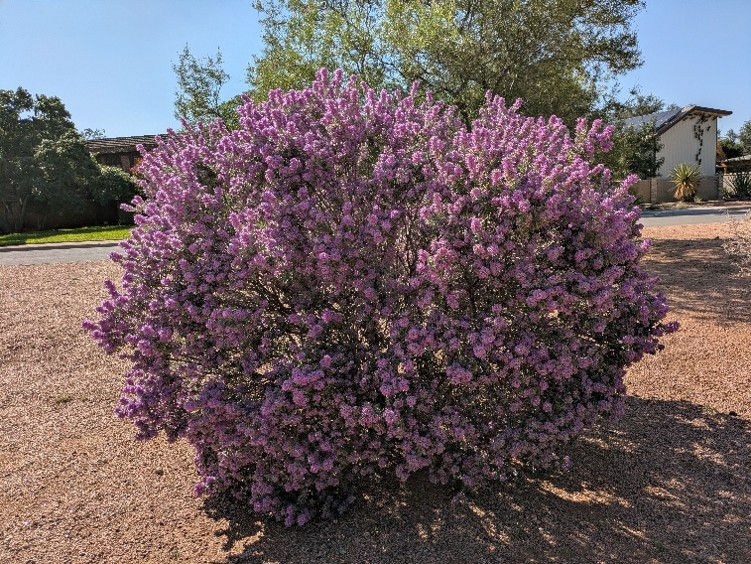
As Texas continues to grapple with drought, rising temperatures, and growing communities, homeowners are increasingly looking for landscapes that conserve water, provide shade, reduce maintenance, support pollinators, and create outdoor spaces that feel connected to the places where they live.
These changing expectations are incrementally reshaping the green industry.
The future landscape professional may spend less time asking how often a lawn should be mowed and more time asking why that lawn exists in the first place. Understanding soil health, native plants, irrigation efficiency, seasonal pruning, and habitat creation is becoming just as valuable as operating equipment.
In many ways, we are witnessing the return of the gardener.
Historically, gardeners were students of place. They understood how water moved across a property, which plants belonged together, when to prune, and when to simply let nature do its work. Groundskeepers managed landscapes as living systems, not just collections of plants that required constant correction.
That knowledge is becoming relevant again.
Municipalities across Texas are beginning to rethink streetscapes, medians, parks, and public spaces. Homeowners are replacing portions of thirsty lawns with native plantings. Neighborhoods are asking what landscapes can contribute beyond appearance. Increasingly, the answer includes water conservation, habitat, reduced maintenance, and a stronger sense of place.
A landscape in Midland should not feel identical to one in Tyler. Amarillo should not look like Galveston. One of the greatest opportunities before us is to rediscover the unique beauty of each Texas region and allow our landscapes to reflect it.
None of this means there won't always be a place for mowing, pruning, or landscape maintenance. Those services remain essential. But the work itself is evolving. The landscapes of tomorrow will require professionals who understand ecology as well as equipment, observation as well as operation.
We are beginning to ask our landscapes to work for us rather than exist solely to impress.
In doing so, we may find ourselves returning to an older idea. An understanding that a garden is not something we control, but something we steward. A place that aligns with its climate, supports its community, and tells the story of where we are.

Mary Sirgo is a Permian Basin Master Gardener, conservation professional, and advocate for landscapes that benefit all Texans: whether they have wings, fur, or boots. To connect with a community of gardeners of all kinds and discuss your gardening questions, call the AgriLife office in Odessa at 498-4071 or in Midland at 686-4700. Additional information is available at westtexasgardening.org.